18 May 2023

Self-Care vs Self-Soothing


Surely someone has suggested that you do more “self-care.” Such as, taking time to have a bubble bath, get a massage, or watch your favourite show. While they are trying to be kind, it feels like the recommendation misses the mark. This is because we have grouped together activities that soothe us and activities that care for us.

Self-soothing is activities that help distract us and provide comfort during a difficult time. These are things such as smelling the flowers, getting a massage, comfort foods, playing your favourite video game, having a bubble bath, bingeing your favourite show, singing loudly, or taking a break from responsibilities. In the simplest way, these provide an escape during distressing times.

Whereas self-care is activities that give us meaning and support our growth. Going to therapy, getting appropriate medical care, getting enough sleep, exercising, having boundaries, eating healthily, and connecting with people that provide reciprocal care, are all examples of self-care activities. It is a way of prioritizing your own well-being.

It is important that self-care is a daily habit or ritual. Starting off the day with care and self compassion makes you better able to navigate any of the difficulties that life may throw at you during the day.

Christine Miserandino in 2003 came up with the Spoon Theory. It was this idea that each day we have a certain amount of spoons to get through the days activities. For example, let’s say you have 12. Activities such as getting ready for work, getting the kids to school, commuting to work may each take two spoons; then you are left with six spoons for the remainder of the day. Then by the end of the work day you have no spoons left. You are on empty and drained. 

Self-soothing may be useful to then comfort ourselves to get through the rest of the day. Whereas Self-care may help extend the spoons, reducing the cost of each activity.

One isn’t better than the other, it’s a matter of timing. Sometimes self-soothing will be the most beneficial activity, and other times it may be self-care.

Just remember that it is important to prioritize yourself. Schedule time in your calendar so that you can practice self-soothing or self-care. If you don’t, you just might forget to.


26 April 2023

12 Ways To Reduce Anxiety


Anxiety is one of the most common mental health concerns, affecting up to 20% of Canadians over their lifetime. It can happen at any point during the lifespan, and impacts your thoughts, feelings, behaviours, and body.

Anxiety can be helpful, such as when we see a bear on a path. Anxieties job is to alert us of the danger and to keep us safe and alive. Anxiety becomes problematic happens when our body is preparing for a threat that isn’t actually there, or the reaction is disproportionate to the stressor, such as a math class.

Problematic anxiety gets in the way of being able to do regular work or school activities, gets in the way of relationships, and makes the individuals world smaller. If this is happening to you, or someone you care about, consider talking to your family doctor, counsellor, or a mental health professional.

Sometimes we need to calm the mind in order to calm the body; and other times we need to soothe the body to calm the mind. 

Here are some tips on how to manage and reduce anxiety:

1. Meditation: Allows us to slow down and calm our body and mind, keeping anxiety at bay. It doesn’t have to be a meditation marathon, even just five to ten minutes is beneficial.

2. Exercise: Regular exercise can lower our stress levels making us better able to manage our anxiety.

3. Breathing: Practicing breathing deeply, all the way to our belly, helps alleviate stress and can lower our heart rate.

4. Reality Check: Using thought challengers of “do I have good reasons that something will go wrong?” or “is there a chance I am over worried?” or “what would I do for a friend having these thoughts?” can all help challenge anxious thoughts.

5. Time Limit: Having a set aside worry time for 5-15 minutes gives a space, albeit limited, for anxiety to have a voice – but it only gets a voice during that time. You may need to remind anxious thoughts that they are only allowed during a certain time.

6. Eat Healthy: Reducing sugar foods and eating a balanced diet can help our body be healthier to fight off anxiety.

7. Limit Caffeine: Caffeine elevates the body and can magnify anxiety struggles.

8. Pet: Cuddling and petting your dog or cat can help regulate and soothe the body. Pets can be very nurturing.

9. Spend Time With People You Care About: Sharing space with people who make you feel safe, seen and understood can help soothe the body and manage anxiety. Not to mention, it feels good to be around people we care about and who care about our wellbeing.

10. Sleep: If we don’t get enough sleep, we have less gas in the tank to be able to manage the days stressors, including anxiety. Making sure you get adequate sleep can help reduce anxiety.

11. Music: Listening to soothing music – whatever that may be – can help calm our body and mind.

12. Journal: Journaling can be very cathartic. There is something wonderfully freeing that happens when we allow our anxious thoughts to go from our mind to a piece of paper.

Give some of these a try to see what works, or what doesn’t work for you. It’s trail and error; but also takes practice.

If you want to learn more about anxiety, Anxiety Canada is an excellent resource.

18 January 2023

Wellness Wednesday: Navigating BC's Mental Health Services for children and youth.

Kelty Mental Health created an excellent video on how to navigate BC's mental health services for children and youth.

Trying to figure out what to do can be difficult and overwhelming as a parent/caregiver.

This video talks about the four ways to start getting support for your child having a mental health struggle.

1. Family Doctor or Nurse Practitioner

2. Your child's teacher and/or school counsellor

3. A private mental health worker (counsellor or psychologist)

4. Child and Youth Mental Health, or Indigenous Child & Youth Mental Health.

If you have any questions about connecting yourself or your child with mental health services, please feel free to contact me.


07 December 2022

Wellness Wednesday: December Self-Care Ideas


The days are getting shorter and shorter which can make it difficult to think of ideas of self-care. 

Here's a list of 20 ideas. Pick three and give them a try!

16 November 2022

Wellness Wednesday: MEDSS (Self-Care)


If we are to break down self-care to it's core points, it is to: move, eat healthy, drink water, sleep, and socialize.

It creates a catchy acronym of MEDSS.

By doing MEDSS it helps alleviate our pain, hunger, anger, loneliness, and tiredness (PHALT). Therefore giving us a little more fuel in our tank to take on whatever the day may throw at us.

If you are struggling with self-care, pick one, and start there. Have a glass of water, go to bed 15 minutes earlier, take the stairs, munch on veggies, or connect with a friend, just to name a couple of ideas.

Self-care is a way of being.

09 November 2022

Wellness Wednesday: PHALT


Pain, Hunger, Angry, Lonely, Tired. These are the basic and foundational components that self-care needs to look after. In the past, we have used the acronym HALT, but Pain, whether emotional or physical, is also a risk factor for relapse.


That being said, we all increase our chances of having a successful day if we have minimal exposure to pain; make sure our stomachs are full; we have healthy ways of expressing our anger; we feel connected to our friends, family, community, and creator; and that we have enough sleep. We all know what it’s like to be HANGRY, and the impacts that has on our decisions.

As we discussed last week about change, relapse is a normal learning process. Frequently relapse, or becoming overwhelmed, happens when we are in pain, hungry, angry, lonely, or tired.

When we are trying to make change or are trying to manage stress, we need to look after these five needs, they help keep our emotional tank full. 

02 November 2022

Wellness Wednesday: Stages of Change.


With Addictions Awareness Week at the end of this month, it feel appropriate to discuss topics related to managing, dealing with, and healing from addictions.

To start, let's talk about change.

Often when we discuss change we think there should be immediate action. When, in reality, there are three steps prior to any action being taken. 

First there is the pre-contemplative, the “ignorance is bliss” stage. 

Next is contemplative, which are ambivalent thoughts about changing - in a month or two or more. 

Next is preparation, which is testing the waters to see what plans need to be made to make the change. 

Then it’s action, followed by the ongoing stage of maintaining the change. 

Note that relapse from the change can happen at any point (and we’ll discuss that more next week).

While I appreciate the Stages of Change model, I also want to include Virginia Satirs model of change, which is all about changing the status quo. There is our current status quo, which will remain constant until we take action. 

After taking action, the foreign element, uncomfortable chaos ensues as we begin to navigate the change we are trying to make. It’s difficult. Things often get worse before they get better when we incorporate change. But when we have our epiphany and the change transforms us, we reach a new, better, status quo. There is always hope.

Making changes are difficult. You don’t have to do them alone. There are several self help groups in the community: https://ekass.com/storage/literature/Self%20Help%20Group%20Schedule-March%202021_TsFlUN8.pdf

Taxa

27 August 2021

10 (+2) Board Games that Counsellors Should Have


It amazes me as I meet with different counsellors that our board game, or card game selection in our offices are rather standard: Connect four, Trouble, Jenga, a deck of cards, and similar 15-minute games.

I won't bash these games, they have value in helping create safety and familiarity in a strangers counselling office. Plus most of those games children and youth already know how to play, so it is easy to bring the game off the shelf and play.

As an example of how useful those games can be in a therapeutic setting, Jenga. While not clinical, Jenga is a great game to experience how a child or youth experience and handle anxiety, fear, and stress.

However, I think it's worthwhile looking at games (some pinterest finds), that can further create opportunities to build relationships, explore feelings, understand body language, be insightful, and create safety in a counselling setting.

So, let's get down to business.

07 June 2019

Top Tabletop Games as voted by Grades 5 & 6


It's my second year doing a board game club for grades 5's and 6's at a school.

Last year I had them vote on their favourite games, it only seemed fitting to do it again this year.

So here are this years Top 5 table top games as voted by Grade 5&6 students!

#5. Happy Salmon


Such a simple, yet fun and boisterous game!

#4. Pit


Pit was #3 last year, fell a spot. But it's amazing how this commodity training game continues to be popular.

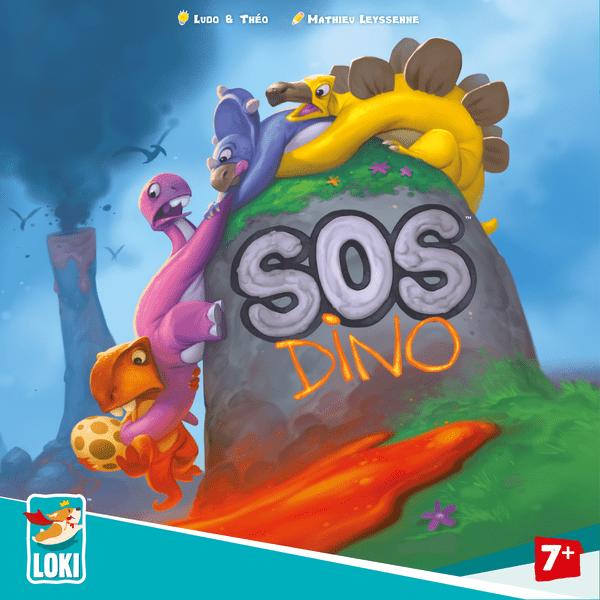
#3. SOS Dino


This cooperative game to save the dinosaur eggs, and the dinosaurs themselves, is great for building team skills and problem solving.

#2. Fabled Fruit


Rising from #5. Collect fruits, steal them, or create chaos through redistribution, so that you can juice fruits faster than your opponents.

#1. Uno (Spaz)


Yes, Uno itself is fun. But have you ever played SPAZ Uno? Divide the cards up amongst the players, then going around the table one at a time each player places a card face up (like war), if there are two consecutive matching colours, there is an accompanying action. Green grass, slap your hand on the table or floor; Red heart, slap your hand on your heart; Yellow fever, slap your hand on your forehead; Blue sky, raise your hand in the air. If you are the fastest to do the action, you collect the cards on the table and add them to your deck. What happens when you get a wild card? You have to do all four actions as fast as possible. For safety, remove jewelry on your hands, wrist, and take glasses off. Enjoy!


Here are 6-10 to round out the top ten:
6. Exploding Kittens
7. Who Farted
8. Prey Care
9. Beasts of Balance
10. Poo!

15 May 2019

Lessons learned from Dr. Thira's "The Community is the Medicine" Wellness Training


I recently attended a two-day training with Dr. Darien Thira, a clinical psychologist based out of BC, but also an expert in using community based interventions for wellness, particularly in Indigenous communities.

I wanted to share some of the main insights that I gained from the training. Some of the insights are lengthy, some are short one sentences.

Post Colonial Thinking
One of the first pieces he addressed was the importance of thinking in a non-colonial fashion. It sounds easy, but it is really difficult to do. Colonialism has impacted everyone is some shape or form.

Good Enough Parenting
It's not everyone's favourite term, good enough parenting. But if you are a "good enough" parent, your child will have the foundation to reach 90% of their potential. If you are a perfect parent, if that even exists, that will make up the remaining 10%. This is an important message that you can still be good enough to raise a successful child, you don't need to be perfect.

Successful Helping Relationships
There are three things Dr. Thira identified that helpers can bring to the table to make an effective helping relationship: who you are, being useful, and being safe.

He later presented a different interpretation of what makes a helping relationship work. In the past it was identified as 40% extra therapeutic factors, 30% the helping relationship, 15% hope, and 15% technique. Dr. Thira said 40% is the clients readiness to change, 30% is the therapeutic relationship, 15% is the counsellors readiness, and the remaining 15% is technique.

Re-framing Depression
Dr. Thira presented a different definition for depression, that it is a realistic view that lacks imagination for hope.

Trauma Braid
Our Survival Instinct to Traumatic Event Coping to Colonization Terms
Flight to Anxiety to Addiction
Freeze to Depression to Suicide
Flight to Rage to Violence

This is an interesting flow of how our natural instinct may correlate with a response to trauma, which then has a colonization impact.

Successful Circles Created for First Responders
Dr. Thira emphasized that circles should be small to contain the safety.

Circles should go through four phases or steps: past, present, future (individual), future (community).

Many circles, in my experiences and Dr. Thira's stop at the second step. We talk about the terrible thing that has happened and how it impacts us presently, but we never talk about what we are going to do about it on an individual and community level.

Counselling is Spritiual
Dr. Thira said that counselling is spiritual. It is a placebo, a non-medical effective intervention.

Don't Say "Stop It"
When it comes to addiction or problematic behaviours, there is a tendency to say "just stop it." However, as any addiction counsellor knows, the behaviour needs to be replaced with a healthier habit.

Replacement Technique
Building upon the replacing a habit with something healthier, Dr. Thira outlined the following steps:
-Identify the Problem Behaviour
-Purpose of the Behavior. The answer to this question "What would I lose if it stopped?" is the purpose of the behaviour.
-Problem Behaviour Advantages.
-Problem Behaviour Disadvantages
-Replacement Behaviour

As you begin to understand the advantages and disadvantages of a behaviour it becomes easier to identify a customized replacement behaviour. The new behaviour may not have the same advantages, but the costs of the disadvantages should be greatly reduced.

Balance Respect & Care
It is a delicate process for helpers, who want to help, to show appropriate respect and care for clients. If we do things for them, we are caring but not respecting. Balance needs to be found when supporting individuals.

No Respect Responses create Low Self-Esteem
Dr. Thira encouraged us to be careful with our words, and what we may be unintentionally telling someone when we try to give them advice.

As some examples if we try to give advice to protect them, we are in way telling them that they are vulnerable. If we give advice to solve, they have a problem. If we want to use advice to be fast, they are slow. To help, they are helpless. Because we have they answer, they are stupid. Because we are strong, they are weak. To fix, they are broken.

Low self-esteem is then expressed in two ways according to Dr. Thira. Despair or Arrogance. Despair then tends to create a victim state of being, and arrogance a bully state of being.

Dr. Thira said that the antidote for advice is a question.

Post-Traumatic Growth
Wounds have the ability to become gifts.

Importance of Creating Safety 48 hours after a traumatic event
Dr. Thira gave a timeline that if safety is created within 48 hours of a traumatic event, it lowers the chance that the emotional fallout of the event will create the symptoms of post traumatic stress.

This for me personally emphasized the importance of walk-in counselling clinics to be available to create an emotionally safe environment for individuals. However, keep in mind that 40% of counselling success is client readiness, and a client may not be ready to deal with a traumatic event 48 hours after ward.

Validation-Invitation 2-Step
First, validate the person or the situation. To validate the individual consider validating the person themselves, their social connections, culture, or principles. To validate the situation, validate emotions, thoughts, observations or needs. Personally, I tend to do more validating of the situation.

Second, invite. Seek information, and then create steps to change.

Scaffolding
I Do, We Do, You Do. Can also be considered as modelling.

Four Branches of the Wellness Wheel
The primary model driving Dr. Thira's interventions is the Four Branches of Wellness:
-Caring Connection
-Respectful Empowerment
-Contributing Purpose
-Cultural/Spiritual Wisdom

When the four branches are in unison, it creates self-worth and a worthwhile life.


For more information about Dr. Darien Thira visit Thira.ca

Picture at top: Myself with Dr. Darien Thira